CASE STUDY / THEODORE ROOSEVELT PRESIDENTIAL LIBRARY / MEDORA, ND / JULY 2026
Four days in Medora
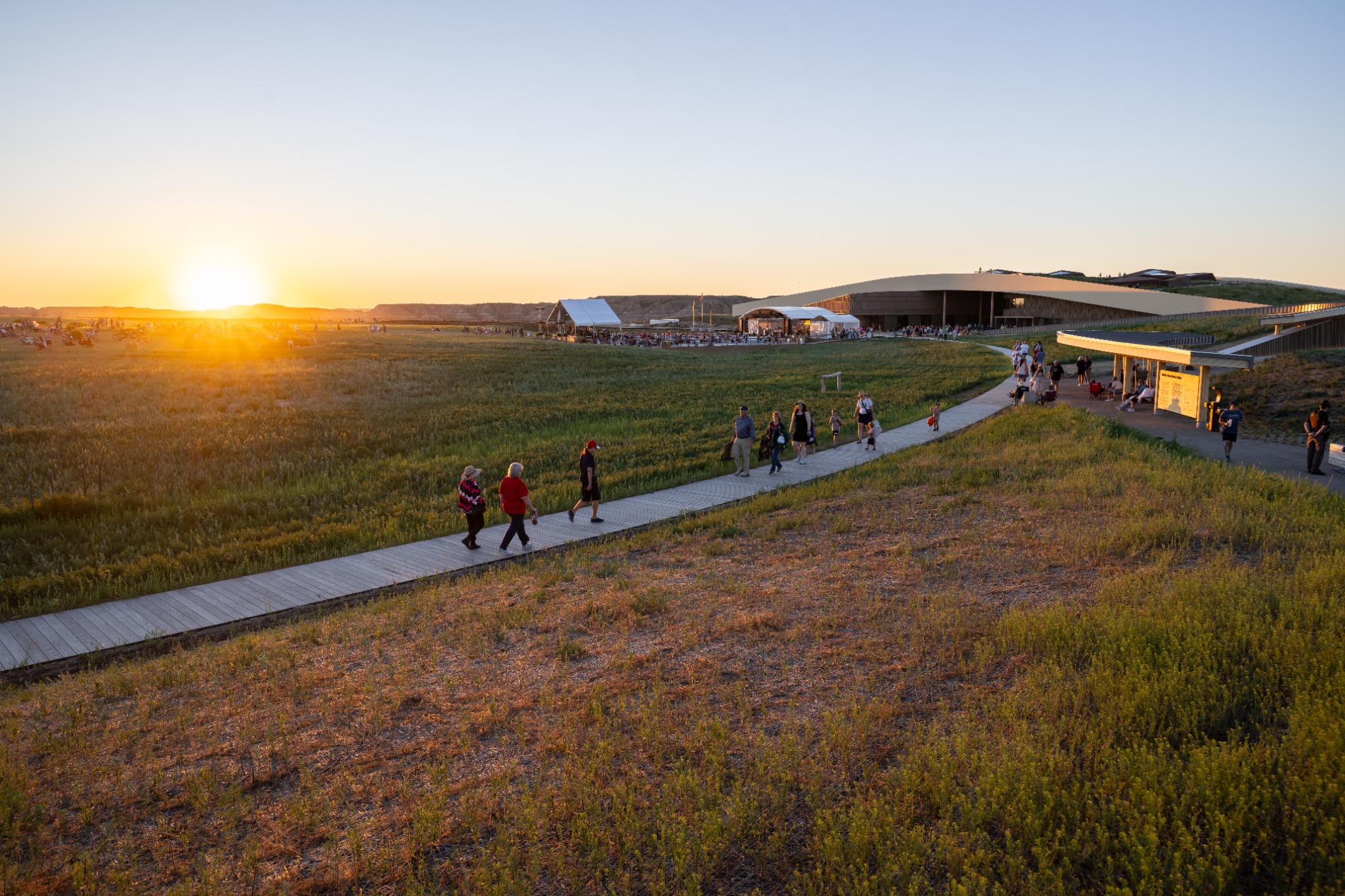
On July 1, 2026, the sitting president visited the Theodore Roosevelt Presidential Library. Over the next two days, its auditorium hosted conversations about history, conservation, business, public service, and the responsibilities of leadership. On July 4—America’s 250th birthday—the Library opened to the public.
By then, I had spent six and a half years at TRPL, beginning as one of its first employees. As Director of Partnerships, I helped connect leadership decisions with partner execution and align programming and participation across the week. I had a front-row seat to an institution coming into public life—and a part in helping it get there.
Those four days brought several different occasions into one place. A presidential visit carried national significance and federal requirements. Founding benefactors were coming to see what years of commitment had made possible. Speakers and partners were helping introduce the institution’s intellectual life. Residents and holiday visitors had their own expectations of the Fourth of July in Medora.
The opening needed to hold those purposes together while respecting the small town that would host them. Space, lodging, roads, staffing, and public services were finite. The work was to give the week a coherent shape, make consequential choices about participation, and establish responsibilities that could withstand changing plans.
Giving the opening a workable shape
The early planning questions were fundamental: Who was the opening for? Which experiences mattered most? What could the institution responsibly promise? Which activities belonged to the Library, and which needed other partners to lead?
Leadership and committee discussions turned those questions into priorities for the teams contributing to the week.
The Moss Agency led program management, integrating the schedule, guest experience, budget tracking, and delivery. The Dufour Collaborative led production. Library leadership and the Grand Opening Committee provided institutional direction.
Working alongside the Moss and Dufour teams was an education in what it takes to deliver an occasion of this scale.
Between those responsibilities sat the work of translation: consolidating leadership input, identifying decisions that needed an answer, and carrying that answer into the program. Board presentations, executive updates, and planning meetings made the developing event understandable at different levels of detail. The same decision might need to appear as a strategic choice for the board, an assignment for a producer, and a clear expectation for a guest.
Four days, with different purposes
The schedule became one of the most important expressions of that strategy.
Medora already had a Fourth of July tradition. Moving the core invited programming to July 2 and 3 created space for a true public opening on July 4. Guest arrival and departure patterns, local capacity, committee priorities, and the potential presidential visit all informed that evolution.
By the final planning stretch, the week had a recognizable arc. July 1 held the distinct presidential occasion. July 2 and 3 brought founding supporters into the Library through tours, conversations, and gatherings. July 4 opened the institution to the public.
Each day could contribute to the larger story without carrying every expectation at once. The opening could honor the people who had helped build the Library, introduce what it would offer, and then begin its public life.
That structure still had to survive the details. Speakers had limited windows. Guests had commitments in several places. Some sessions depended on participants whose plans were still changing. A strong overall calendar needed continual attention to the people moving through it.
A presidential arrival
On July 1, the president arrived in Medora aboard a BNSF train decorated in red, white, and blue for the nation’s 250th birthday. The arrival echoed Theodore Roosevelt’s own journey to Medora.

For our team, the presidential visit brought a nationally significant occasion immediately before the Library’s inaugural programming. My role was to help keep partners, institutional priorities, and the guest experience aligned as plans evolved.
Watching the arrival unfold was one of the week’s unforgettable moments. Now the Library’s own inaugural programming could take center stage.
A national moment in a living town
For residents and businesses, opening week also meant getting to work, receiving deliveries, welcoming customers, and navigating an unusually busy holiday. Public agencies had to prepare for traffic, heat, emergency response, and demand on local services.
Those were central planning concerns. Coordination required a shared understanding of what was known, what was still changing, and who would take responsibility. Community briefings and intergovernmental meetings connected the Library’s plans with the needs of the town and the capabilities of public partners.
Public parking and transit materials made the plans usable for visitors. The practical questions—where to go, how to get there, what was open, and where to find updates—were part of delivering a public welcome.
Turning a program into an experience
The inaugural talks were an opportunity to show what kind of institution was opening. Roosevelt’s legacy provided connections across conservation, enterprise, citizenship, public service, happiness, and stewardship of place.
The program developed through choices about themes, participants, moderators, and venues. Sessions were consolidated as confirmations changed. Audience interests and the balance of perspectives mattered alongside the strength of any individual conversation. Executive review and speaker preparation helped turn those choices into a schedule people could follow.
Individual briefings addressed another layer of the experience. A government executive, featured author, or Roosevelt family member might have responsibilities spread across several days and teams. Each needed a clear view of fixed commitments, optional invitations, and arrangements still awaiting confirmation. The briefings gathered those threads while preserving the programming and production teams’ detailed instructions.
The artwork dedication in the Medicinal Garden required particular care with meaning. It honored the 2022 land blessing, a gathering I had helped organize, while dedicating the artwork. The run of show needed to carry that distinction faithfully, with the artist and cultural participants bringing their own authority to the gathering.
Across the week, coherence depended on attention at both scales: the purpose of the whole opening and the experience of a person arriving for one part of it.
From planning to public life
On July 2 and 3, I served as MC for the auditorium programming. Walking into the auditorium that first morning felt almost surreal. After years of helping prepare for this moment, I was there to welcome people into it. Speakers and moderators carried the substance; introductions and transitions connected sessions as history led into contemporary questions about leadership, conservation, business, and public responsibility.

Months of planning became the schedules, roles, handoffs, and scripts used daily on the ground. Their value was in the people who could act from them together: welcoming a guest, preparing a speaker, or moving into the next part of the day.
Between sessions, there was finally room to walk around, greet guests, and watch the place fill with life. The group chats stayed active, but the days were unfolding largely according to plan. The team was carrying the work together, leaving room to experience what we had helped make possible.
Macy, our children, and my parents were there too. Seeing three generations of my family enjoy the Library made the week personal in a different way. The kids found the craft room, storytime, and the climbing room in the exhibits; after years of talking about what the Library might become, it had become a place they could simply enjoy.

July 4 brought the next transition: the public came through the doors. Opening-day reporting captured some of the people behind that moment. A Montana librarian drove seven hours to be near the front of the line. “I knew I had to show up,” he told the North Dakota Monitor. Visitors from Wyoming were already looking forward to bringing their grandchildren.
The Library also drew national attention. The New York Times called it an “easy charmer,” while The Wall Street Journal praised architecture that harmonized with its landscape. That recognition reflected years of work by the Library’s architects, exhibit creators, and many partners. Opening week gave people their first opportunity to experience it.
The opening was the shared work of TRPL, the community, public agencies, program and production partners, speakers, cultural participants, and the people working throughout the week.
Roosevelt called it “the chance to work hard at work worth doing.” We had spent years bringing the Library into being. Now people were bringing it to life.